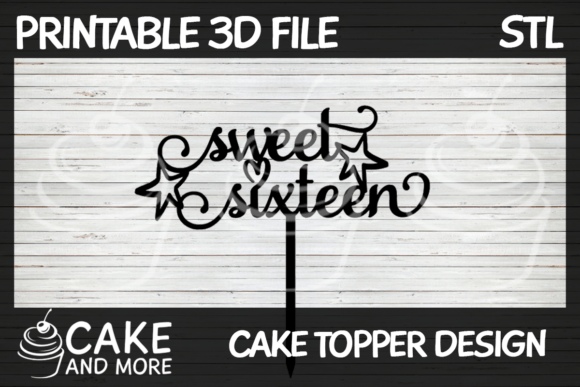
Sweet Sixteen Cake Topper Design
In the realm of visual storytelling, a single element can define the entire aesthetic of an event, and a well-crafted Sweet Sixteen Cake Topper does exactly that by merging typography with three-dimensional form. For graphic designers and creative professionals, this isn't just a party decoration; it is a tangible example of how script typography, spatial composition, and material texture converge to create a memorable brand moment. When exploring digital assets like the Elegant Script 3D Printable STL file, we are looking at more than a physical object—we are examining a versatile design asset that bridges the gap between digital precision and tactile experience.
The Intersection of Typography and 3D Form
From a professional graphic design perspective, the transition from two-dimensional screen graphics to three-dimensional printables requires a deep understanding of visual hierarchy and structural integrity. The "Sweet Sixteen" script font featured in modern STL files often utilizes flowing ligatures and decorative swirls that must remain legible when extruded into resin or filament. This challenges the designer to consider how negative space functions in a volumetric environment. Unlike standard web design where pixels dictate clarity, a 3D printed topper relies on overhangs, wall thickness, and surface finish to communicate elegance.
When evaluating such a design for a project, consider how the visual weight of the text balances with decorative elements like stars and hearts. In branding, this balance ensures that the message remains the focal point while supporting graphics enhance the mood without causing visual clutter. A sophisticated design maintains readability even when scaled down for cupcakes or enlarged as a centerpiece, demonstrating the scalability essential in modern creative workflows.
Practical Applications Beyond the Bakery
While the primary function of this asset is celebratory, the principles behind its creation offer valuable insights for broader design applications. The same attention to detail required for a high-quality cake topper applies to various sectors of visual communication:
- Branding and Logo Design: The fluidity of the script font can inspire custom logo marks that feel personal yet premium, suitable for lifestyle brands or boutique businesses.
- Packaging Design: The concept of embossed or debossed typography seen in 3D models can be translated into textured packaging to elevate product perception.
- Social Media Graphics: Using 3D renders of these assets creates dynamic content for digital marketing campaigns, offering depth that flat images cannot achieve.
- Merchandise and UI Design: The iconography used (stars, hearts) can serve as modular elements in user interfaces or branded merchandise, maintaining a consistent visual language across touchpoints.
Optimizing Your Design Workflow with Digital Assets
For creators managing their own design workflow, utilizing pre-designed STL files streamlines the process from concept to final output. Instead of modeling complex organic shapes from scratch, designers can focus on customization. By importing the file into slicer software, you can adjust parameters to suit specific printing technologies, whether using FDM filament for a rustic look or SLA resin for a polished, glass-like finish. This flexibility allows for rapid prototyping and iteration, a crucial aspect of modern editorial design and advertising campaigns.
When integrating such assets into a larger brand identity, consistency is key. Ensure that the color palette chosen for post-processing—such as painting or coating the printed piece—aligns with the existing brand guidelines. A mismatched hue can disrupt the professional presentation, whereas a cohesive color strategy reinforces brand recognition. Furthermore, consider the audience expectations; a Sweet Sixteen celebration demands a tone of sophistication and joy, which the design must convey through its curves and details.
Evaluating Quality and Usability
Selecting the right creative asset involves more than just downloading a file. Evaluate the geometry for printability and the artistic merit of the typography. Does the script flow naturally? Are the decorative elements distinct enough to survive the printing process? These questions are vital for ensuring the final deliverable meets professional standards. High-quality assets save time and reduce the risk of errors, allowing designers to allocate resources toward strategic thinking rather than troubleshooting technical flaws.
Ultimately, thoughtful design choices transform simple objects into powerful communication tools. Whether used for a milestone birthday or adapted for a commercial project, the quality of your creative assets directly impacts user engagement and overall aesthetic appeal. By leveraging precise typography and robust 3D modeling, designers can craft experiences that resonate emotionally and visually, proving that even the smallest details play a monumental role in successful visual design.