Snowy Christmas Cabin Layered Papercut: A Workflow for Precision Crafting
The intersection of digital design and tangible artistry has never been more accessible than it is today. For makers, small business owners, and creative professionals, the ability to translate a vector file into a high-quality physical product is a critical skill. The Snowy Christmas Cabin Layered Papercut represents more than just a festive image; it is a structured asset designed to streamline the production of dimensional paper art. By utilizing a 6-layer construction, this design offers a refined multi-dimensional look that elevates standard flat crafts into gallery-worthy shadow boxes and decorative displays. Understanding how to integrate this specific asset into your existing workflow ensures that you maximize efficiency while maintaining the highest standards of craftsmanship.
Understanding the Design Architecture
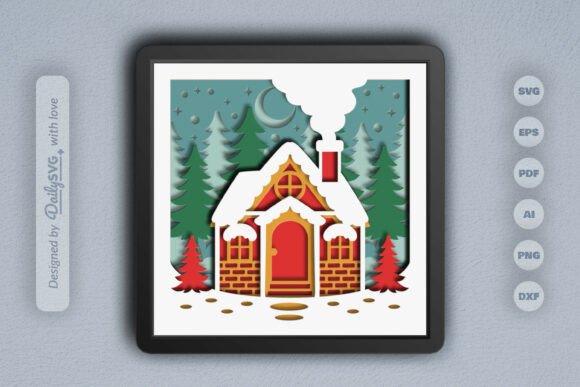
At its core, the Snowy Christmas Cabin Layered Papercut is an engineered solution for depth. Unlike single-cut silhouettes, which rely solely on outline definition, layered papercuts utilize sequential stacking to create shadows, gradients, and perspective. This particular design from Daily SVG is optimized for a cutting size of approximately 20 × 20 cm (8 × 8 inches). This dimension is not arbitrary; it is a strategic choice that balances visual impact with material economy. It fits perfectly within standard shadow box frames and allows for efficient nesting on standard sheets of cardstock or specialty paper.
The architecture of the design relies on six distinct layers arranged with precision. Each layer serves a specific function in the final composition. The background layers establish the setting—perhaps a snowy sky or distant trees—while intermediate layers build the structure of the cabin. The foreground layers provide the focal point, often featuring details like smoke from a chimney or intricate window panes. This separation allows for color variation and texture mixing, enabling creators to customize the mood of the piece without altering the underlying geometry. When planning a project, recognizing these layers as individual components rather than a single block is the first step toward successful execution.
Integrating File Formats into Your Production Pipeline
A robust crafting workflow depends heavily on file compatibility. The Snowy Christmas Cabin Layered Papercut comes packaged as a premium set, addressing the diverse needs of modern makers who utilize various hardware ecosystems. Whether you are running a Cricut Maker, a Silhouette Cameo, a Glowforge laser cutter, or an XTool diode laser, the included file formats ensure seamless integration.
- SVG Files: These are the industry standard for vector cutting machines. The organized, cut-ready format ensures that each of the six layers is easily identifiable within your design software, reducing setup time and minimizing errors during the nesting process.
- PDF Files: Essential for print-and-cut workflows or for those who need a clear visual guide for manual assembly. The PDF serves as a blueprint, allowing you to verify layer alignment before committing expensive materials to the cutting mat.
- PNG Previews: High-resolution artwork references are crucial for marketing and client presentations. Before a single sheet of paper is cut, you can use these previews to visualize the final product or share mockups with clients to confirm design choices.
- DXF Files: Ideal for older machines or basic software that may not support complex SVG attributes. This format ensures backward compatibility, extending the lifespan of your equipment investment.
- EPS and AI Files: For advanced users and professional designers, these vector formats allow for deep editing. You can modify line weights, adjust colors, or even restructure elements to fit unique branding requirements or custom frame sizes.
By having access to this full suite of files, you eliminate the friction often caused by file conversion issues. This variety supports a flexible workflow where the same design can be adapted for different tools or output methods without losing fidelity.
Preparation and Material Selection
Success with the Snowy Christmas Cabin Layered Papercut begins long before the machine starts cutting. Proper preparation is the cornerstone of quality control. Because the design features intricate details across six layers, the choice of material significantly impacts the final outcome. Standard printer paper is generally too flimsy to hold the structural integrity required for a 3D effect. Instead, opt for cardstock ranging from 65 lb to 110 lb. This weight provides enough rigidity to stand up when layered but remains thin enough to nest tightly without creating excessive bulk.
Color selection is another critical decision point in your planning phase. To achieve the "snowy" aesthetic inherent in the design, consider using a gradient approach. Start with darker blues or greys for the background layers to simulate twilight or deep winter shadows, transitioning to lighter whites and creams for the foreground. Alternatively, a monochromatic scheme using varying shades of blue can create a sophisticated, icy atmosphere. If you are producing personalized gifts, incorporating metallic foils or textured papers for specific layers can add a tactile element that enhances the perceived value of the item.
Before cutting your primary materials, always perform a test run on scrap paper. This step verifies that your blade depth, pressure settings, and speed are calibrated correctly for the specific thickness of your chosen stock. Misalignment during the cutting phase can lead to jagged edges or incomplete cuts, which are difficult to repair once assembled.
Execution: Cutting and Assembly Strategies
Once your materials are selected and your machine is calibrated, the execution phase focuses on organization and consistency. The Snowy Christmas Cabin Layered Papercut is designed for smooth assembly, but this requires a disciplined approach to handling the cut pieces. As you remove layers from the cutting mat, organize them immediately according to their sequence. Using a stack of index cards or a dedicated sorting tray can prevent layers from getting mixed up, especially when working on multiple units simultaneously.
For shadow box applications, the assembly process involves adhering layers to a backing board or using foam tape to create elevation between layers. Foam tape is particularly effective here; it lifts each layer slightly above the one beneath it, enhancing the depth perception and ensuring that light catches the edges of the paper. Apply adhesive sparingly to avoid warping the paper, and press down firmly to secure the bond. If you are creating a hanging decoration, consider reinforcing the top layer with a double-sided mount to ensure durability.
Efficiency in this stage is key for those managing a business or fulfilling bulk orders. Batch processing—cutting all layers for ten projects before moving to assembly—can significantly reduce machine downtime. However, if you are working on a single, highly detailed piece, a linear approach of cutting and assembling one unit at a time may yield better quality control. The flexibility of the design allows you to choose the method that best suits your current capacity and goals.
Applications Beyond Decoration
While the primary use case for the Snowy Christmas Cabin Layered Papercut is decorative, its utility extends into broader creative and commercial workflows. For educators, this design serves as an excellent tool for teaching concepts of layering, depth, and spatial reasoning in art classes. It can also be used to create interactive storybooks or classroom decorations that engage students visually.
Small business owners can leverage this asset to create limited-edition holiday products. By pairing the papercut with custom packaging or handwritten notes, you transform a digital download into a premium physical good. The high-resolution PNG preview allows for professional product photography, enabling you to list items on Etsy or other marketplaces with confidence. Furthermore, the editable AI and EPS files mean you can adapt the design for corporate clients who may want to incorporate their logo or brand colors into the scene, opening up opportunities for B2B gifting.
For freelancers and marketers, the design demonstrates technical proficiency. Showcasing the finished product in a portfolio highlights your ability to manage complex vector files, select appropriate materials, and execute precise assembly. It proves that you understand the end-to-end process of digital fabrication, from file management to physical delivery.
Long-Term Value and Consistency
Investing in high-quality assets like the Snowy Christmas Cabin Layered Papercut contributes to long-term consistency in your work. Because the files are organized and optimized, you can return to this design year after year, knowing that the results will remain reliable. This repeatability is essential for building a brand identity. Clients and customers come to expect a certain level of polish, and using well-structured designs helps maintain that standard without reinventing the wheel every season.
Moreover, the compatibility with major cutting platforms ensures that your workflow remains future-proof. As technology evolves, the foundational vector formats included in the package remain relevant, allowing you to upgrade your hardware without losing access to your favorite designs. By focusing on practical implementation, thoughtful material selection, and organized execution, you transform a simple digital file into a masterpiece of thoughtful craftsmanship. The Snowy Christmas Cabin Layered Papercut is not just a holiday decoration; it is a versatile component of a professional maker's toolkit, ready to enhance any project with depth, clarity, and seasonal charm.